Experienced Rochester Gutter Contractors: Ice Damage Restoration & Repair Services
The cold Upstate New York winter season brings not just snow but also ice. Unfortunately, ice can damage your gutters. If your gutters have been damaged by inclement weather, MIG Building Systems can help. Since 1975, we have been responding to these problems in the Rochester area with gutter guard and gutter heating solutions, as well as insulation, air sealing and more.
We would like to provide you with some information and possible solutions to your ice questions.
Ice Dam & Icicle 101
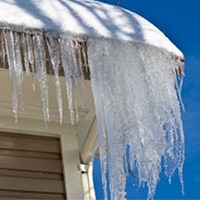
Ice dams usually occur after a heavy snowfall and several days of freezing temperatures. Warm air inside your home leaks into the attic and warms the underside of the roof, causing snow and ice on the roof to melt. The melted water drains along the roof to the cold overhang and refreezes, forming an ice dam and icicles. The ice dam enables the trapped water to get under the roof shingles, causing water to leak inside your home.
What Causes Ice Dams & Icicles?
For ice dams to form, there must be:
Snow: Only Mother Nature can control the amount of snow and the temperature outside. As the snow piles up and the temperature drops, the potential for ice grows.
Heat: There are several reasons why the snow on your roof will melt in a way to cause ice dams or icicles:
- The sun – Sunlight hits the highest points of your roof and melts the snow. As this occurs, it exposes the mainly dark roofing in the area, absorbing even more heat from the sun. Depending on the direction your home faces, tree coverage and wind direction, this can be a major cause of snow melt.
- Insulation – Another reason for snow melt is lack of insulation. The main living space of your home sits directly under the ridgeline. As the heat of your home penetrates the insulation, this warms the underside of the roof deck and causes snow to melt. Building codes for our area require a minimum R-38 (approximately 12 inches of insulation).
- Ventilation – The exhaust created by ridge vents, gable vents and box vents forces fresh air up through the soffits, keeping the temperature in the attic the same as it is outside. This is the goal of all attic ventilation systems. Keeping the attic cold, especially the underside of the roof decking, helps prevent the melting of the snow.
- Air infiltration – Small holes in your ceilings can allow a significant amount of warm air into the attic space. Holes are drilled for electrical lines, ceiling fans, chimneys, can lights, attic hatches, bath fans, etc., and all of these allow heat to travel up and warm the roof.
Cold: As snow on the highest points of your roof melt, the water runs underneath the lower snow packs, freezing at the eaves (the coldest part of your roof). Once this process begins, it builds upon itself, causing icicles and ice damming.
Fixing the Problem
- Have a home insulation company bring your attic up to a R38 – R49 insulation value.
- Install proper ventilation.
- Air seal the attic to close holes with caulk and foam products.
- Use a gutter heating system
Preventing Ice Dams & Icicles from Forming
- Keep your gutters clean – Contrary to popular belief, gutters do not cause ice dams. However, dirty gutters do help concentrate ice and water at the vulnerable roof eaves area. As gutters fill with ice, they often bend and rip away from the house, bringing down roofing parts and downspouts with them.
- Remove the snow – Keep your roof clean with a snow rake, or hire a professional to do this work. Roof valleys can be a major issue, and some ice may be unavoidable.
- Use heat tape/cables – Gutter heating cables can work well in certain situations.
IMPORTANT NEWS: Tips from NYSERDA for Preventing Ice Dams
If you see ice buildup and icicles hanging from the eaves of your home, you may have an ice dam, a major cause of roof leaks and energy loss in winter. The New York State Energy Research and Development Authority (NYSERDA) recommends taking steps immediately to prevent ice dams.
If you already have an ice dam problem, hire an expert to solve the immediate issue. Don’t climb on your roof, and always avoid standing on the ground and “chipping away” at the ice. Not only can your chipping damage the roof, but you can be seriously injured.
NYSERDA recommends the following ice dam prevention tips:
- Seal air leaks and duct leaks in your attic to stop warm air leakage, a source of ice dam problems. After sealing leaks, add additional insulation in your attic.
- Provide adequate attic ventilation so the underside of the roof and outside air are at the same temperature. Check to make sure attic insulation is not blocking roof ventilation. Incorrect ventilation can cause mold and mildew problems.
- If you didn’t clean leaves and other debris from gutters before the first snow, see if you can have it done before another storm hits. This will help prevent ice buildup.
- Hire a participating Home Performance contractor accredited through the Building Performance Institute (BPI) to conduct an in-home comprehensive energy assessment. The comprehensive home energy assessment will not only suggest specific home improvements to prevent future ice dams, but will also recommend ways to reduce energy use, save money and improve the health and safety of your home. This “whole house” approach can significantly reduce energy costs
About NYSERDA
NYSERDA, a public benefit corporation, offers objective information and analysis, innovative programs, technical expertise and funding to help New Yorkers increase energy efficiency, save money, use renewable energy and reduce their reliance on fossil fuels. They have been developing partnerships to advance innovative energy solutions in New York since 1975.
Gutter Repair in the Rochester, NY Area
If you want help reducing ice dams, icicles and other problems that can damage your gutters and roofing, MIG is a good name to know. We offer a variety of gutter services, including:
- Gutter guard installation (Gutter Helmet or Screen-Mesh Gutter Protection)
- Gutter heater installation
- Gutter repair
- Gutter replacement
Contact us today to learn more!